
Key Takeaways
- Setting aside one consistent evening each week for shared play creates a reliable anchor that keeps households connected even during busy stretches.
- Board games, card games, and simple group activities build vocabulary, executive function, and communication skills in children of all ages.
- Choosing games that match the youngest player’s abilities while still engaging adults keeps everyone invested rather than bored or frustrated.
- Protecting the chosen night from work emails, errands, and screens signals that togetherness is a non-negotiable priority.
- Rotating who picks the game gives every household member a sense of ownership and prevents the ritual from feeling stale.
- Snacks, a loose structure, and a willingness to end early when needed make the tradition sustainable long-term.
- Small, repeated moments of play often matter more for bonding than occasional big outings or vacations.
Why Modern Households Feel Stretched Thin
Most adults today are juggling more roles than any generation before them. There are deadlines at work, group chats with teachers, laundry piles that never shrink, and the quiet guilt that comes from feeling like no one gets your full attention. If that sounds familiar, you are not alone. About 54% of full-time working parents say the pull between career and home feels difficult, with mothers reporting the strain even more often than fathers.
The tricky part is that nobody teaches you how to manage all of this. You pick it up as you go, usually by burning out first and adjusting later. The result is a lot of households where people live in the same house but rarely sit down together without a screen in hand.
This guide is for anyone starting from scratch. No fancy productivity systems. No expensive retreats. Just one small, repeatable habit that can quietly rebuild the warmth of a home: a weekly game night.
What a Game Night Really Is (and What It Is Not)
Before diving into logistics, it helps to clear up what we are actually talking about. A game night is simply a set evening each week when everyone in the household gathers around a table to play something together. That is it. There is no required length, no special equipment, and no need for competitive skill.
What it is not: a chore, a performance, or another thing to feel guilty about if you miss a week. The point is connection, not perfection. Some nights will involve a long strategy game. Other nights might just be twenty minutes of Uno before bedtime. Both count.
The core ingredients
To get started, you really only need a few things:
- A consistent day and time each week
- One or two games that fit the ages at your table
- A snack or drink to make it feel special
- Phones out of reach for the duration
- A willingness to let the kids win sometimes (and lose sometimes too)
Once these pieces are in place, the ritual tends to run itself.
How Play Supports Child Development
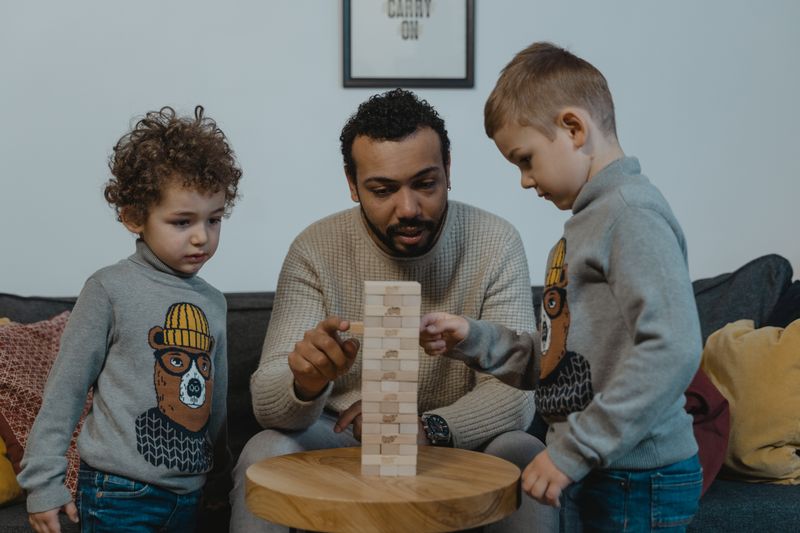
If you are wondering whether this is actually worth the effort, the research is encouraging. Shared play is not just entertainment. It is one of the oldest and most effective ways humans teach each other how to think, cooperate, and communicate.
According to a Carnegie Mellon finding shared through North Carolina State University Extension, kids in households that gather often for games and shared meals tend to develop larger vocabularies by age two and score higher in reading throughout their school years. That is a remarkable return on an hour a week.
Younger children benefit in a different way. Cornell University Cooperative Extension points to work from the University of Wisconsin-Madison showing that board games can strengthen executive function in toddlers, meaning the mental skills they need to focus, plan, and control impulses. Pair this with other habits for raising happy children, and you create a foundation that pays off for decades.
Picking the Right Night and Protecting It
Choosing the day matters more than people expect. Pick an evening when nobody is rushing to an activity or recovering from a long commute. For many households, Friday feels natural because the workweek is winding down. Others prefer Sunday as a soft landing before Monday.
Once you pick the night, defend it. This is where the real work lives. Easy wins and understandable rules make this part feel less rigid.
Boundaries that actually hold
Here is a short list of boundaries that tend to work:
- Treat the time slot like a doctor’s appointment on the calendar
- Decline optional work calls or late meetings on that evening
- Keep the TV off and phones in another room
- Order simple food or prep something easy ahead of time
- Let close friends and extended family know this night is reserved
These small acts of protection send a message to everyone, including yourself, that this hour matters.
Learning How to Balance Work and Family Life Through Simple Rituals
For a lot of people, the question of how to balance work and family life feels enormous and vague. The honest answer is that balance is rarely found through sweeping lifestyle overhauls. It shows up in small, repeated choices that add up over months.
A weekly game night works because it is specific. You know exactly when it happens, who is involved, and what you are doing. There is no decision fatigue, no last-minute planning, and no debate about whether it counts as quality time. That predictability is a gift in a schedule that is otherwise full of surprises.
It also reframes what success looks like at home. Instead of chasing the perfect vacation or the ideal weekend, you focus on this one small window. Over time, those windows stack up, and family life starts to feel less like a logistics puzzle and more like something you actually enjoy. In fact, SurveyMonkey research for CNBC found that 28% of workers now rank balance between job and personal time as their top motivator, narrowly beating out pay. People want this. They just need a starting point.
Choosing Games That Fit Everyone at the Table
Game selection can make or break the ritual. If the game is too hard, little kids check out. If it is too simple, teenagers roll their eyes. The sweet spot is a game that gives the youngest player a real chance to compete while still asking the adults to think. That balance is harder to find than it sounds, but once you land on two or three titles that work for your crew, game night stops feeling like a negotiation and starts feeling like something everyone actually looks forward to.
When evaluating a potential game, look at three things: playtime, learning curve, and the kind of thinking it rewards. A 20- to 40-minute game tends to work best on a school night, since anything longer risks melting down the youngest player right before bedtime. The learning curve should be gentle enough that you can teach the rules in under five minutes. And the thinking it rewards should be varied- pattern recognition, memory, bluffing, spatial reasoning- so that no single family member always has the upper hand.
Here are some beginner-friendly options to explore:
- Cooperative games like Outfoxed or Forbidden Island, where everyone works together against the game itself rather than each other, which is especially helpful for families with sensitive younger kids
- Classic card games like Uno, Skip-Bo, or Crazy Eights that cost almost nothing, travel well, and teach turn-taking without heavy rules
- Light strategy games like Ticket to Ride: First Journey or Sushi Go that introduce real decision-making in a format kids as young as six can grasp
- Party games like Telestrations or Dixit for mixed ages, where creativity and laughter matter more than winning
- Dice games like Qwixx or Tenzi for quick rounds that fit into shorter evenings or serve as a warm-up before a bigger game
- Tile-laying games like Carcassonne or Kingdomino, which give visual thinkers a chance to shine
- Trivia-style games with adjustable difficulty, so teens and adults can play the “hard” cards while younger kids tackle easier prompts
Start with two or three options and rotate. Let kids pick on alternating weeks so they feel ownership of family life, not just along for the ride. If a game flops, retire it without drama; there is no need to force a title just because it got good reviews or because a neighbor swears by it. Keep a small shelf or bin dedicated to game night so grabbing the night’s options takes seconds, not a scavenger hunt through closets. The goal is engagement, not loyalty to any particular box on the shelf, and figuring out how to balance work and family life through play means staying flexible about what actually brings your people to the table week after week.
Keeping the Habit Alive Over Time
The first few weeks are usually easy. There is novelty, excitement, maybe even some surprise about how much fun everyone is having. The real test comes around week six or seven, when a work trip, a sick kid, or a soccer tournament threatens to pull the ritual apart.
The households that keep this tradition going for years tend to share a few habits. They forgive missed weeks instead of abandoning the whole project. They refresh the game shelf every few months to keep things interesting. They adjust the format as kids grow, swapping shorter games for longer ones as attention spans mature.
Signs the ritual needs a tune-up
Even a good habit can go stale. Watch for these quiet warnings:
- The same person wins every week, and others are losing interest
- Kids ask to skip more often than they ask to play
- The games on rotation have not changed in six months
- Someone always ends up frustrated or in tears
- The night runs so late that mornings suffer
When any of these show up, treat it as useful information rather than failure. Swap in a new title, shorten the session, or let a child teach the adults a game they learned at school. Small adjustments usually bring the energy back.
Handling Resistance From Teenagers and Reluctant Adults

Not everyone will be thrilled at first. Teens especially may groan at the idea of sitting down with parents on a Friday. A spouse coming off a brutal week might want to zone out instead of engage. This is normal and does not mean the idea is doomed.
A few tactics help soften the resistance:
- Keep the first few sessions short, maybe thirty minutes
- Let the reluctant person choose the game or the snack
- Avoid lectures about why this is good for everyone
- Allow a friend to join occasionally so it feels social, not forced
- Celebrate small wins without making it awkward
Most holdouts come around once they realize nobody is judging them and the vibe is genuinely relaxed. The trick is to make the night feel like a privilege, not a punishment.
Expanding the Tradition Beyond the Table
Once the weekly rhythm is established, it tends to spill into other parts of the week. You might find yourself playing a quick card game while dinner finishes cooking, or pulling out dice during a long car ride. The game shelf becomes a shared language that is always available.
Some households build on this by hosting occasional larger nights with neighbors or cousins. Others pair the ritual with a monthly outing, like a trip to a board game cafe or a local library event. These extensions are optional, but they show how one small habit can quietly reshape how a household spends its time together.
If you want to go deeper into building these kinds of shared moments, pairing game night with other intentional routines like weekly meal planning or a Sunday walk can amplify the effect. The point is not to pile on more activities but to let the game night prove to everyone that unhurried time together is worth protecting.
Conclusion
The appeal of a weekly game night is not that it solves every modern pressure. It will not fix a demanding boss, a packed school calendar, or the laundry situation. What it does is carve out a predictable pocket of attention in a week that otherwise pulls everyone in different directions. That pocket is where real connection grows.
If you take nothing else from this guide, take this: start small, start this week, and let the ritual be imperfect. Pull out a deck of cards tonight. Pick a night on the calendar for next week. Tell the people in your home what you are planning and ask them to help choose the first game. The habit does not need to look impressive to anyone outside your walls. It only needs to happen often enough that the people inside start to count on it.
Years from now, the specific games will blur together. What everyone will remember is that there was a night each week when the phones went away, somebody laughed too loud, and the people they loved were right there across the table. That memory is built one Tuesday or Friday at a time, and it starts whenever you decide it does.